Taking Care of HR Business
        A blog from the attorneys of Verrill

        Getting Ready for Election Day: Employee Voting

        by Elizabeth T. Johnston on October 14, 2020

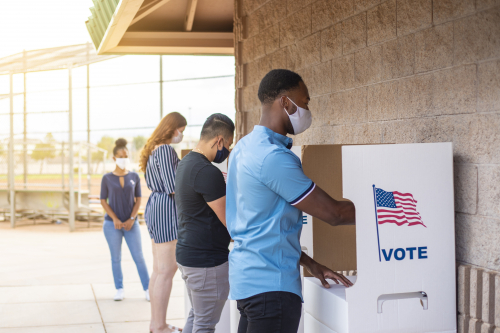
        Election Day is right around the corner. While many employees may choose to vote by mail, chances are you may have employees requesting time away from the workplace (or a remote work set-up) to vote in person. Now is a better time than ever to brush up on employers’ legal responsibilities and best practices for handling employee requests to head to the polls.

        In New England, there is limited state and federal statutory guidance regarding employee voting time. There is no federal law that gives employees time off to vote. Likewise, Maine, New Hampshire, Vermont, and Connecticut have no state law mandating that employees be provided time off to vote. Massachusetts has a limited law regarding employee voting that covers only employees of manufacturing, mechanical, and mercantile entities; the law states that employees of those industries are entitled, upon request, to leave during the two hours after the opening of the polls in the voting precinct, ward, or town where the employee is entitled to vote.

        Although statutory guidance on the topic is scarce, there are steps employers should consider in order to ensure smooth sailing on Election Day and thereafter:

        • Check your existing policies. If your company has a policy in place that addresses employee voting, be sure to study it in advance of Election Day and educate supervisors and managers about the policy so they can appropriately respond to employee requests and questions about leave to vote.
        • Be flexible. In many situations, employees will have sufficient time to vote before or after a shift. Sometimes, however, employees may request time off during the day if they have other responsibilities that prevent them from voting during that time. It is good practice to be flexible and provide a limited period of time, depending on business needs and the employee’s requests, to allow the employee time to vote.
        • Consistency is key. To avoid any potential discrimination or retaliation claims, time off to vote should be provided in a consistent manner among all employees who request it. To help with consistency if you do not have a policy in place, it may be helpful to outline the parameters of what leave you will provide, who can request leave, and how employees should request it. If you deny a request for leave, be sure there is a legitimate business reason for doing so, and document it.
        • Give notice and require notice. If you have a policy in place, provide an update to your employees about the policy and the process for requesting and taking leave, if applicable. If you do not have a policy, let employees know what they should expect from you and, if applicable, what process to use to request leave if they anticipate requesting leave. You should encourage employees to request leave in advance so that you may schedule accordingly.
        • Consider pay practices. Without a legal requirement otherwise, an employer generally does not need to pay wages for time off to vote. However, other wage and hour rules will still apply. Exempt employees receiving a salary should not face any deduction in pay, or it could jeopardize their exempt status. Advise non-exempt employees to keep track of time spent working outside the office—for example, checking and responding to emails while waiting in line at the polls. In addition, if you opt to make voting leave unpaid, you should determine whether employees may or must use paid time off to cover that time (so long as it that would otherwise be consistent with your paid time off policy).
        • Remind employees about health and safety precautions. While employees are tasked with complying with pandemic precautions on a regular basis, polling places could potentially see a high turnout of visitors, which can create a risk of exposure to illness without use of proper precautionary practices and social distancing efforts. Accordingly, now could be a good opportunity to make sure that your employees are up-to-date on their responsibilities and the appropriate course of action to take if they are symptomatic with an illness or come into close contact with someone with a positive COVID-19 test result.

        We hope these tips will help you prepare your workplace for Election Day. If you have any questions, please contact a member of Verrill’s Employment and Labor Group.

        Taking Care of HR Business

        Human resource professionals, supervisors, and company executives are constantly confronted with a changing legal landscape. Verrill’s Taking Care of HR Business blog is designed to keep you informed about the latest and most significant legal developments that affect employers.

        Key Contact

        Subscribe

        Looking for more great content? Subscribe for regular legal updates and information delivered right to your inbox.

        Firm Highlights

        Blog

        What is a Bonus for Purposes of ERISA?

        An ongoing dispute about a Department of Labor advisory opinion published last September raises a basic but unanswered question under the ERISA: What...
        Media Mentions

        Verrill Recognized by WMTW for Partnership Supporting Hunger Relief in Maine

        Verrill was recently featured in coverage by WMTW News 8 for its role in a collaborative effort to combat food insecurity across southern...
        Press Releases

        33 Verrill Attorneys, Across Four Offices, Recognized in the 2026 Chambers USA Guide

        BOSTON, Massachusetts, PORTLAND, Maine, WESTPORT, Connecticut, and WASHINGTON, D.C. – Verrill has been recognized as a Leading Firm in 14...
        Blog

        Will the Knicks Beat the Spurs? (Are Prediction Market Event Contracts Gambling?)

        For those of you who like to keep score, currently 18 states are engaged in litigation over prediction markets, such as Kalshi and Polymarket,...
        Alerts and Newsletters

        DOJ Announces Faster Review and Enhanced Enforcement for Benefits-Fraud FCA Matters

        On May 27, 2026, the U.S. Department of Justice (DOJ) Civil Division issued a new memorandum, “Accelerating Review and Enhancing Enforcement in...
        Alerts and Newsletters

        DOJ Announces Minnesota Health Care Fraud Takedown; Signals Intensified Medicaid Enforcement Nationwide

        On May 21, the Department of Justice (“DOJ”) announced a first-of-its kind Minnesota Health Care Fraud Takedown charging 15 defendants, including...
        Media Mentions

        Lauren Galvin Quoted in Massachusetts Lawyers Weekly on Arbitration and Anti-SLAPP Protections

        Verrill Partner Lauren Galvin was recently featured in a Massachusetts Lawyers Weekly article highlighting a notable Superior Court decision...
        Blog

        Section 530A Accounts: What Employers Should Consider Before Offering Contributions to “Trump” Accounts

        Section 530A accounts, commonly referred to as Trump accounts, have attracted attention since the enactment of the One Big Beautiful Bill Act in...
        Blog

        Navigating PBM Reform: Regulatory Changes, Market Shifts, and Practical Guidance for ERISA Fiduciaries

        Pharmacy Benefit Manager (“PBM”) arrangements have long relied on rebates with limited transparency into true drug costs. Recent regulatory and...
        Blog

        DOL’s Proposed Regulation on Selecting Alternative Investments: Broad Implications for 401(k) and 403(b) Plan Fiduciaries

        On March 30, 2026, the Department of Labor issued a proposed regulation purporting to implement an executive order to expand access to “alternative...
        Press Releases

        Verrill Welcomes Private Clients & Fiduciary Services Attorney Gracie Castle

        BOSTON, Massachusetts – Verrill is pleased to welcome Gracie Castle to the firm’s Private Clients & Fiduciary Services Group as an Associate,...
        Published Works

        Francesco De Vito Authors Article in the Journal of the American College of Mortgage Attorneys

        Verrill Partner Frank De Vito authored an article featured in the Spring 2026 issue of The Abstract, the journal of the American College of Mortgage...