Taking Care of HR Business
A blog from the attorneys of Verrill

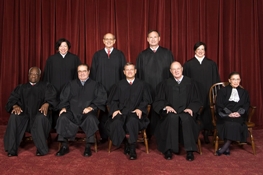 On Monday, the Supreme Court heard oral argument in a case that could significantly inhibit public unions’ abilities to collect dues from non-members. Since the Supreme Court’s decision in Abood v. Detroit Board of Education in 1977, the courts have distinguished between fees charged by unions for representing public sector workers (“agency fees”) and fees charged by unions for financing their political activities. While public unions may not charge non-members fees associated with their political activities, they are permitted under current law to charge non-members for agency fees. The plaintiffs in Friedrichs v. California Teachers Association seek to change that.
The rationale for distinguishing between agency fees and political activity fees finds its root in the First Amendment. In Abood, the Supreme Court held that requiring employees who are non-members of the union to pay a political activity fee would result in “compelled speech,” i.e. the non-members would be paying for the union to make political statements on their behalf that they did not agree with. Thus, non-members are permitted under current law to opt-out from paying the political activity fee. On the other hand, the Court in Abood permitted unions to charge non-members agency fees associated with the costs of bargaining, contract administration, and grievance adjustment because the non-members benefitted from the union’s actions on their behalf whether or not they were members of the union.
In Friedrichs, however, the plaintiffs claim that Abood was wrongly decided because everything that public unions bargain over implicates public policy and therefore has First Amendment implications. For example, public unions determine how much money the government will spend and how it will spend it. Therefore the plaintiffs ask the Supreme Court to do one of two things: (1) overrule Abood and hold that public unions may not charge non-members agency fees; (2) if the Court does not overrule Abood, require that unions give non-members an opportunity to opt-in to paying political activity fees, as opposed to the current state of the law where non-members must only be given an opportunity to opt-out.
At oral argument on Monday, the Court spent the majority of the time asking questions focused on whether Abood should be overruled; little time was spent on the opt-in/opt-out distinction. Those opposed to overruling Abood emphasized that the plaintiffs in the case have a heavy burden in seeking to overturn 40 year old precedent. They also emphasized that the Supreme Court’s recent decisions have given states more leeway on First Amendment issues when the state acts as an employer. Those in favor of overruling Abood focused on the fact that agency fees require non-members to subsidize a union taking positions contrary to their beliefs.
Based on the statements made by the Justices at oral argument, we expect that the Supreme Court’s decision on this issue will be a close one, and we will keep you updated as the case develops. In the mean time, if you have questions about the payment or collection of union dues, contact a member of Verrill Dana’s Labor & Employment Group.
Verrill Attorney Annabel Rodriguez Named Top Women of Law by Massachusetts Lawyers Weekly
BOSTON, Massachusetts – Verrill attorney Annabel Rodriguez has been recognized as a Top Women of Law by Massachusetts Lawyers Weekly, and will be...What Employee Benefits Lawyers Do (and How to Make the Best Use of Us)
What do employee benefits lawyers do all day and how can clients make the best use of them? This post offers an overview of the kinds of things...Bloomberg Law Quotes Robert Keach on Expanded Access to Small Business Reorganization
Verrill attorney Bob Keach was recently featured in Bloomberg Law, discussing legislation that would raise debt limits for bankruptcy relief and...Phil Bartlett to Step Down as Chair of the Maine Public Utilities Commission
On September 15, 2026, Governor Janet Mills announced that Phil Bartlett will step down as Chair of the Maine Public Utilities Commission (PUC)...Jay McCormack and Michael Fee Co-Author AHLA Article on Skin Substitute Enforcement Trends
Verrill Partners Jay McCormack and Michael Fee co-authored an article for the American Health Law Association's Fraud and Abuse Practice Group...Verrill Welcomes Health Care & Life Sciences Attorney Elpida Velmahos
BOSTON, Massachusetts – Verrill is pleased to announce that Elpida Velmahos has joined the firm’s Health Care & Life Sciences Group as an...A New Protected Class in Maine: Holders of Final Protection Orders
In the lead-up to Domestic Violence Awareness Month in October, employers may be taking a closer look at how their policies and practices respond to...Verrill Secures SJC Victory for Boston Legacy FC in White Stadium Litigation
Verrill has secured a significant appellate victory for Boston Legacy FC in the litigation challenging the redevelopment of White Stadium in...