You Might Be a Winner
A blog from the attorneys of Verrill

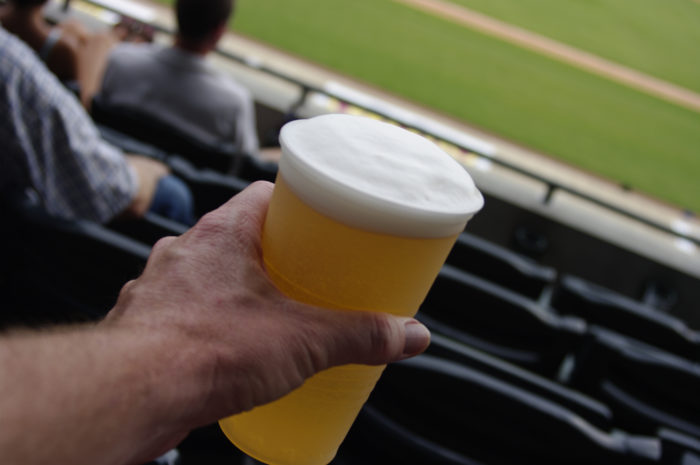 Today (March 29) is baseball’s opening day and beer and baseball are in the news. The New York Yankees appear to be in trouble for their new “Pinstripe Pilsner” which has an image of your favorite Yankee player in the foam. But those of you wanting to take a sip of Aaron Judge’s mug may have to wait, since MLB does not allow current players on beer advertising.
Beer has been linked with baseball for as long as baseball has existed. In fact, the original Cincinnati Redstockings left the National League in 1881 when its brewer-owner refused to sign a “no beer at the ballpark” pledge. Today, there are still calls to take the suds out of sports. But knowing the current do’s and don’ts of sports advertising will help you stay a-head of the game.
What is an Advertisement
An advertisement is essentially anything you say publicly to promote your product. According to the Alcohol and Tobacco Tax and Trade Bureau (TTB), an advertisement is “any written or verbal statement, illustration or depiction, which is in, or calculated to induce sales in, interstate or foreign commerce, or is disseminated by mail.” This includes ads in newspapers, magazines, trade publications, menus, wine cards, leaflets, circulars, mailers, book inserts, catalogs, promotional materials and sales pamphlets. It also includes any written, printed, graphic or other matter accompanying the container, markings on cases, billboards, or other outdoor displays. And, yes, it includes websites and other Internet-based advertising such as social media.
Who Makes and Enforces the Rules
The Federal Alcohol Administration (FAA): The FAA Act contains the labeling and advertisement requirements/prohibitions for alcohol. (27 C.F.R. Part 7).
The Alcohol and Tobacco Tax and Trade Bureau (TTB): The TTB has primary responsibility for enforcing the FAA Act. The TTB was born out of the Bureau of Alcohol, Tobacco and Firearms (ATF) in 2003. The TTB has authority to regulate the labeling of alcoholic beverages to prohibit labels and advertising that are, among other things, false and misleading. As it relates to beer and sports ads, the TTB is essentially limited to ruling that a label or ad is “socially irresponsible” by a showing that the label or ad is false, deceptive, misleading or conveys an erroneous impression. It has traditionally been the ATF’s position that the depiction of athletes on labels and in advertising is often deceptive and misleading in that it conveys the impression that consuming alcohol is conducive to athletic skill or that it does not hinder an athlete’s performance.
The Federal Trade Commission (FTC): The FTC has concurrent jurisdiction with the TTB to enforce the FAA Act, but traditionally has deferred to the TTB.
State Alcohol Beverage Control (ABC) agencies: Generally, state ABCs have broad authority to enact regulations, investigate violations and impose administrative sanctions.
Self-Regulatory Agencies – Beer Institute and Brewers Association: These are trade associations whose rules do not have the force of law, but are commonly followed as best practices in the industry.
Sports Leagues: Such as the NCAA, MLB, NFL and NASCAR. Many professional sports leagues prohibit active players from any alcohol advertising, see “Pinstripe Pilsner” above.
Guidance
For guidance, the ATF has previously issued a list of labels or advertisements that are unacceptable in sports advertising:
1. Stating that consumption of alcohol will enhance an athlete’s performance;
2. Depicting any individual consuming, or about to consume, alcohol prior to or during an athletic event; and
3. Depicting consumption of alcohol while the person is seated in or about to enter a motor vehicle.
The ATF has also issued a list of labels or advertisements that are acceptable:
1. Depictions of athletes whether in motion or not and whether in uniform or not;
2. Depictions or references to motor vehicles whether with driver or not;
3. Team logos;
4. Schedule of athletic events; and
5. References to specific events or equipment.
The relevant trade associations also have some beer-specific ad guidelines:
1. Beer ads should not portray beer drinking before or during activities, which for safety reasons, require a high degree of alertness or coordination;
2. Beer ads should not claim or represent that individuals cannot obtain athletic success without beer consumption.
Most professional sports leagues do not have a list of accepted or unacceptable beer ads, but the NCAA does have specific beer ad regulations:
Only ads for beers that do not exceed six percent alcohol AND
i. The ads do not compose more than 14 percent of the space in any NCAA publication devoted to advertising or not more than 60 seconds per hour of any NCAA championship programming;
ii. Ads incorporate the “Drink Responsibly” educational messaging; and
iii. The content is respectful – free of gratuitous and overly suggestive sexual innuendo, no display of disorderly, reckless or destructive behavior.
Help
The FAA Act does not require pre-approval of beer ads (although certain television networks may). The TTB does offer industry members, free of charge, a voluntary pre-clearance service, by emailing the ad to market.compliance@ttb.gov.

Verrill Attorney Annabel Rodriguez Named Top Women of Law by Massachusetts Lawyers Weekly
BOSTON, Massachusetts – Verrill attorney Annabel Rodriguez has been recognized as a Top Women of Law by Massachusetts Lawyers Weekly, and will be...What Employee Benefits Lawyers Do (and How to Make the Best Use of Us)
What do employee benefits lawyers do all day and how can clients make the best use of them? This post offers an overview of the kinds of things...Bloomberg Law Quotes Robert Keach on Expanded Access to Small Business Reorganization
Verrill attorney Bob Keach was recently featured in Bloomberg Law, discussing legislation that would raise debt limits for bankruptcy relief and...Phil Bartlett to Step Down as Chair of the Maine Public Utilities Commission
On September 15, 2026, Governor Janet Mills announced that Phil Bartlett will step down as Chair of the Maine Public Utilities Commission (PUC)...Jay McCormack and Michael Fee Co-Author AHLA Article on Skin Substitute Enforcement Trends
Verrill Partners Jay McCormack and Michael Fee co-authored an article for the American Health Law Association's Fraud and Abuse Practice Group...Verrill Welcomes Health Care & Life Sciences Attorney Elpida Velmahos
BOSTON, Massachusetts – Verrill is pleased to announce that Elpida Velmahos has joined the firm’s Health Care & Life Sciences Group as an...A New Protected Class in Maine: Holders of Final Protection Orders
In the lead-up to Domestic Violence Awareness Month in October, employers may be taking a closer look at how their policies and practices respond to...Verrill Secures SJC Victory for Boston Legacy FC in White Stadium Litigation
Verrill has secured a significant appellate victory for Boston Legacy FC in the litigation challenging the redevelopment of White Stadium in...