Taking Care of HR Business
A blog from the attorneys of Verrill

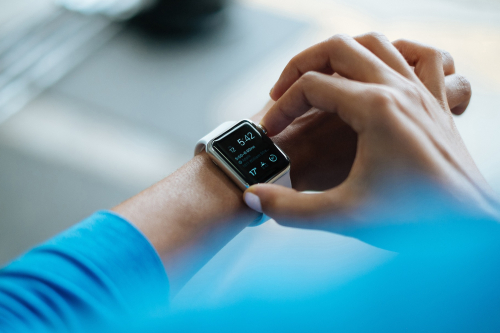 Over the past several years, technology has infiltrated more and more aspects of life—including the employment context. With new consumer and business products and platforms being introduced to the workplace on a daily basis, there are ever-growing opportunities to use tech to improve worker safety, optimize efficiency in the workplace, and streamline processes like hiring. With these advances, however, it is important to understand some of the legal issues that coincide with them.
One area where we have seen significant development in is wearable technology in the workplace. While most people carry their cell phones around with them at work, many are now also wearing jewelry and watches that can alert them to an incoming call, text message, or other notification while measuring their heart rate, steps, location, and sleep schedules. Wearable technology has become even more creative, from eyewear that is able to provide a 3D overlap of building plans on a project site to beacon technology in a badge or lanyard that can exchange information between users through an app, including the number of interactions with co-workers, amount of time for each interaction, schedules, notes and maps. There have also been many tech developments designed to improve employee safety, including headbands that track fatigue and alertness and clip-on devices with built-in gyroscopes to alert supervisors of a fall.
Because of all the data that wearable devices are able to collect, it is important that employers are cognizant of how data is being collected, stored, assessed, and protected. There are a number of potential issues related to the introduction of technology in the workplace, including privacy issues, safety and distraction issues, payroll or status misclassification due to employees working remotely, overreliance on devices, and even the potential for manipulation of data. Biological data may even inadvertently reveal an employee’s disability status. Accordingly, an employer who wants to enjoy the benefits of technology in the workplace should consider how to design and implement policies that will address the privacy and safety aspects of the inclusion of technology in the workplace.
Another tech trend on the rise is the use of artificial intelligence (AI) in employment, particularly in the hiring process. New platforms are available that allow employers to use AI to streamline the process. Programs are available to select candidates for review, evaluate employment applications, and perform interviews while evaluating factors like applicant’s facial expressions and word choice to help predict who would be an optimal candidate. Such software is alleged to not only increase efficiency, but eliminate discriminatory implicit biases that interviewers may bring into the hiring process—however, algorithms are not foolproof just yet, as bias based on protected traits has been discovered in some cases.
Employers considering using AI in the hiring process should be aware of potential risks, including those related to improper bias in the AI algorithms. It is important to self-audit hiring processes and, as with non-AI hiring, be cautious to avoid learning about protected traits of applicants when using these programs. Employers should also stay alert for new legislation related to the use of AI. Illinois broke ground this year with an Artificial Video Interview Act, which requires employers to notify applicants that AI might be used to evaluate a video interview, provide them with information on how the AI evaluates characteristics, and obtain consent from the applicant to be evaluated by AI. Other federal and state legislation is likely soon to follow, so be mindful that legal protections and obligations may change.
If you have questions about how new workplace technology might impact your workplace, contact a member of Verrill’s Employment & Labor Group.
Verrill Attorney Annabel Rodriguez Named Top Women of Law by Massachusetts Lawyers Weekly
BOSTON, Massachusetts – Verrill attorney Annabel Rodriguez has been recognized as a Top Women of Law by Massachusetts Lawyers Weekly, and will be...What Employee Benefits Lawyers Do (and How to Make the Best Use of Us)
What do employee benefits lawyers do all day and how can clients make the best use of them? This post offers an overview of the kinds of things...Bloomberg Law Quotes Robert Keach on Expanded Access to Small Business Reorganization
Verrill attorney Bob Keach was recently featured in Bloomberg Law, discussing legislation that would raise debt limits for bankruptcy relief and...Phil Bartlett to Step Down as Chair of the Maine Public Utilities Commission
On September 15, 2026, Governor Janet Mills announced that Phil Bartlett will step down as Chair of the Maine Public Utilities Commission (PUC)...Jay McCormack and Michael Fee Co-Author AHLA Article on Skin Substitute Enforcement Trends
Verrill Partners Jay McCormack and Michael Fee co-authored an article for the American Health Law Association's Fraud and Abuse Practice Group...Verrill Welcomes Health Care & Life Sciences Attorney Elpida Velmahos
BOSTON, Massachusetts – Verrill is pleased to announce that Elpida Velmahos has joined the firm’s Health Care & Life Sciences Group as an...A New Protected Class in Maine: Holders of Final Protection Orders
In the lead-up to Domestic Violence Awareness Month in October, employers may be taking a closer look at how their policies and practices respond to...Verrill Secures SJC Victory for Boston Legacy FC in White Stadium Litigation
Verrill has secured a significant appellate victory for Boston Legacy FC in the litigation challenging the redevelopment of White Stadium in...