You Might Be a Winner
A blog from the attorneys of Verrill

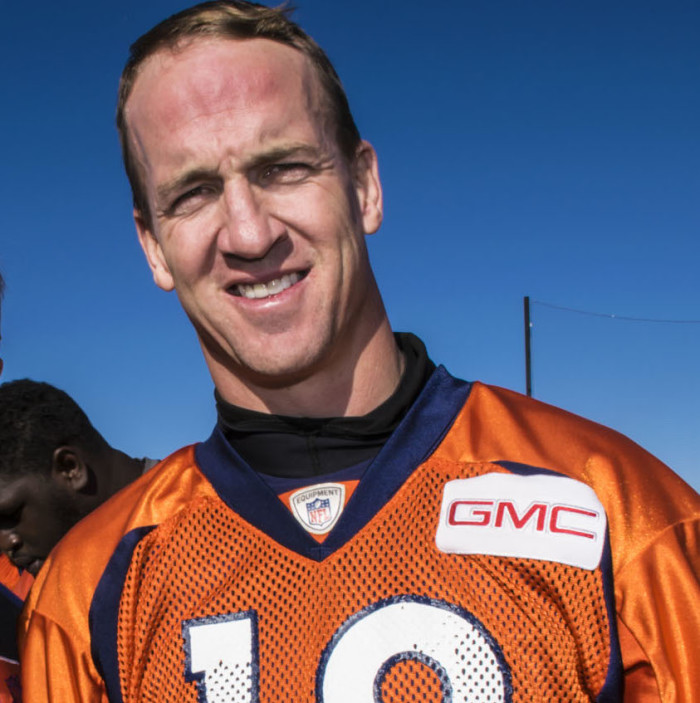 We all know Peyton Manning – he’s a professional pitcher: for Papa Johns, DirecTV, Buick, and Gatorade, among others. He’s also a professional quarterback. But did his post-Super Bowl pitches for Budweiser and Papa John’s go too far. As you may recall loyal followers of this blog, I wrote in December about the new FTC Native Advertising Rules. In particular, how the FTC was looking for transparency when an advertisement is slyly placed so as to appear to be part of the medium itself.
Take a look at Peyton’s hug with the Papa John himself and his comment about Budweiser made on national television immediately after the Bronco’s Super Bowl win. Papa John’s. Budweiser at 1:17
At first blush, both of these actions seem innocuous. Why can’t a player hug one of his biggest benefactors? And who wouldn’t want to drink a lot of Budweiser after a game? But that may be beside the point if money was the motivation for Mr. Manning’s machinations.
Both Budweiser and Papa John’s have pointed out that they did not pay Peyton for these plugs. But the FTC has advised that endorsements (a form of native advertising) require that any material connection between the speaker and the product be disclosed. As stated by the FTC in its “Enforcement Policy Statement on Deceptively Formatted Advertisements”:
As the Commission stated in the Endorsement Guides, “When there exists a connection between the endorser and the seller of the advertised product that might materially affect the weight or credibility of the endorsement (i.e., the connection is not reasonably expected by the audience), such connection must be fully disclosed. … clearly and conspicuously ….” In revising the Guides in 2009, the Commission specifically addressed paid endorsements in non-traditional forms of advertising, such as user-generated social media, personal blogs, online comment forums, or television talk show interviews.
https://www.ftc.gov/system/files/documents/public_statements/896923/151222deceptiveenforcement.pdf
One example from the Endorsement Guidelines closely resembles the Peyton Manning post-Super Bowl pitches. A well-known tennis player is being interviewed on a television talk show, and in response to a comment about how well she is seeing the ball lately, the player informs the audience that she recently had lasik eye surgery at a clinic she identifies by name, and she continues to talk about the doctors and the procedure. Per the FTC, the tennis player should have disclosed that she has a contractual relationship with the clinic which pays her for speaking publicly about the surgery.
https://www.ftc.gov/sites/default/files/attachments/press-releases/ftc-publishes-final-guides-governing-endorsements-testimonials/091005revisedendorsementguides.pdf
Here, even though Peyton was not paid by Budweiser or Papa John’s specifically for his actions, he does have a contract with Papa John’s (I assume, since I see him flipping pizza every time I turn on a ballgame) and, perhaps importantly, he apparently owns an interest in two distributors of Budweiser’s parent company and several Papa John’s pizza franchises. So, anyway you slice it, his actions could arguably be viewed as deceptive, since consumers may only take away from these actions that he likes beer and pizza as much as the next guy.
Granted, it’s not entirely clear how Peyton should have “clearly and conspicuously” disclosed his connection to Budweiser and Papa John’s if he needed to. Perhaps, a simple statement that these are his business partners. Or maybe, just avoiding the plugs altogether. Especially the Budweiser plug, since the NFL has a strict policy against player endorsements of alcohol companies. But despite the FTC’s guidelines, we also cannot lose track of the fact that the statements must be misleading in the first place, meaning that the consumer really mustn’t know that these are plugs. C’mon FTC, every sports fan knows that Peyton is a professional pitchman (and wouldn’t have mentioned these companies unless something was in it for him – o.k., cheap shot, I rooted for Carolina) and every sports fan knows that in Super Bowls past, the MVP was only “going to Disney World” because he was getting paid to do so.

Verrill Attorney Annabel Rodriguez Named Top Women of Law by Massachusetts Lawyers Weekly
BOSTON, Massachusetts – Verrill attorney Annabel Rodriguez has been recognized as a Top Women of Law by Massachusetts Lawyers Weekly, and will be...What Employee Benefits Lawyers Do (and How to Make the Best Use of Us)
What do employee benefits lawyers do all day and how can clients make the best use of them? This post offers an overview of the kinds of things...Bloomberg Law Quotes Robert Keach on Expanded Access to Small Business Reorganization
Verrill attorney Bob Keach was recently featured in Bloomberg Law, discussing legislation that would raise debt limits for bankruptcy relief and...Phil Bartlett to Step Down as Chair of the Maine Public Utilities Commission
On September 15, 2026, Governor Janet Mills announced that Phil Bartlett will step down as Chair of the Maine Public Utilities Commission (PUC)...Jay McCormack and Michael Fee Co-Author AHLA Article on Skin Substitute Enforcement Trends
Verrill Partners Jay McCormack and Michael Fee co-authored an article for the American Health Law Association's Fraud and Abuse Practice Group...Verrill Welcomes Health Care & Life Sciences Attorney Elpida Velmahos
BOSTON, Massachusetts – Verrill is pleased to announce that Elpida Velmahos has joined the firm’s Health Care & Life Sciences Group as an...A New Protected Class in Maine: Holders of Final Protection Orders
In the lead-up to Domestic Violence Awareness Month in October, employers may be taking a closer look at how their policies and practices respond to...Verrill Secures SJC Victory for Boston Legacy FC in White Stadium Litigation
Verrill has secured a significant appellate victory for Boston Legacy FC in the litigation challenging the redevelopment of White Stadium in...